
 Solo Ibiza

Phoenician village of Sa Caleta, the island’s first settlement
The Phoenician village of Sa Caleta is the earliest known urban settlement in Ibiza
According to archaeologists, the Phoenician village of Sa Caleta was the origin of today’s Ibiza. Its remains lie on a small peninsula in the south of the island, next to the beach of the same name, Sa Caleta. Getting there can be a little tricky, though, if you don’t know exactly where it is.
To reach this first neighbourhood of Ibiza, take the road from the airport towards Sant Josep. After a few metres, a sign for the turn-off to Cala Jondal takes you along the coast, past the southern end of Es Codolar Beach. A little further on is the turn-off to Sa Caleta Beach, along a dirt track that forks. To the left you reach a pretty fishermen’s cove where you can leave the car and continue on foot. To the right you reach the beach’s own car park and, from there, a path that leads to the Phoenician village.
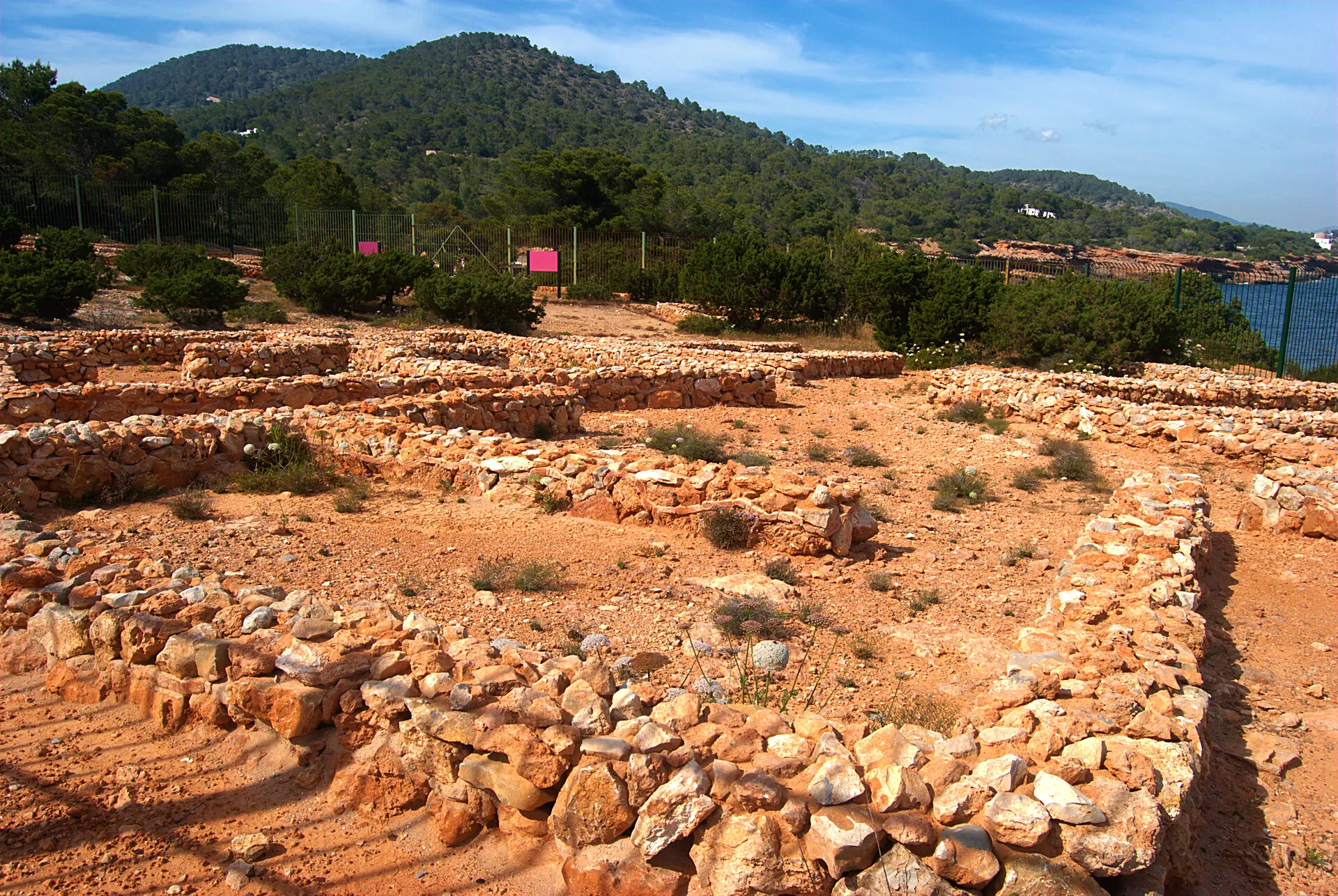
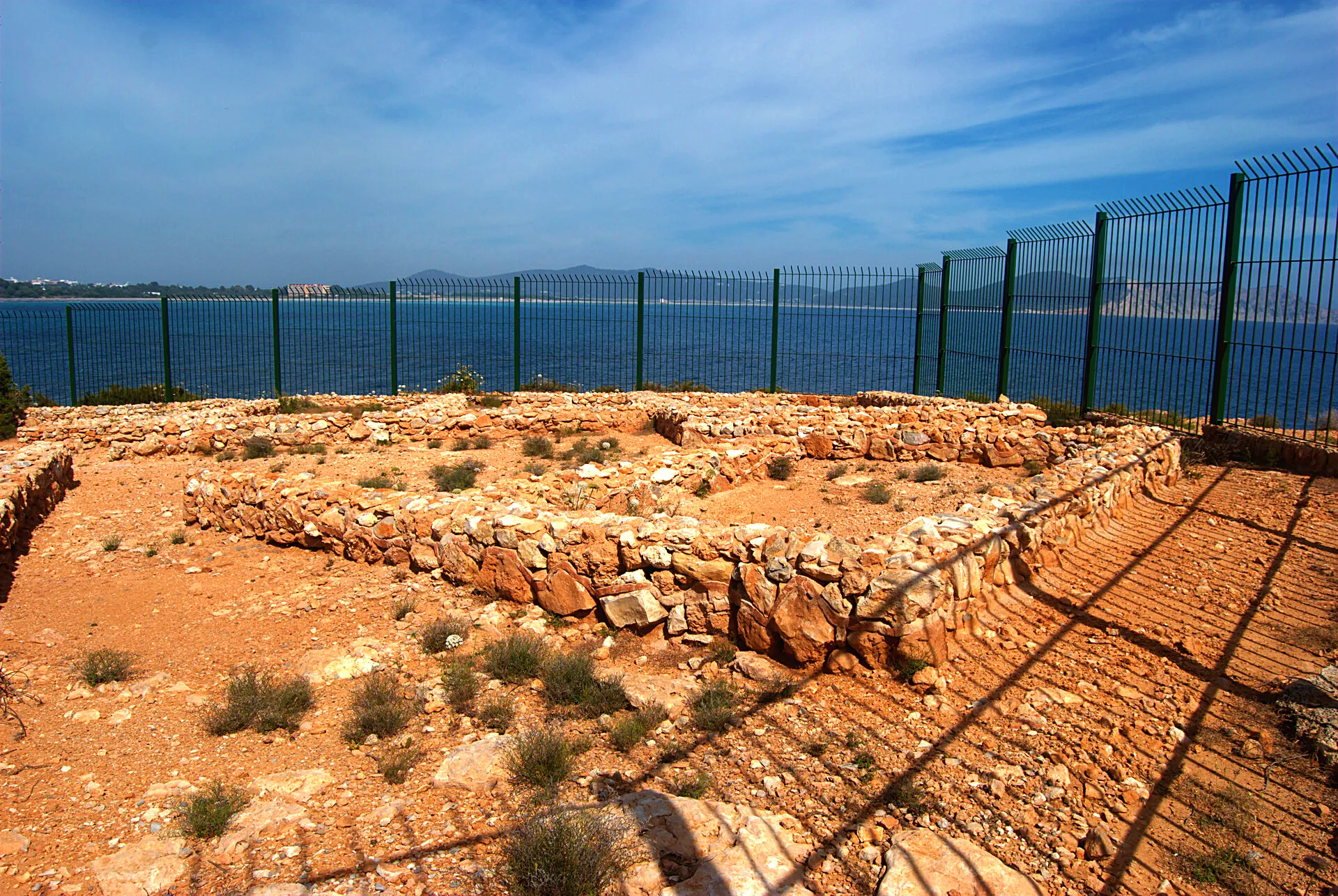
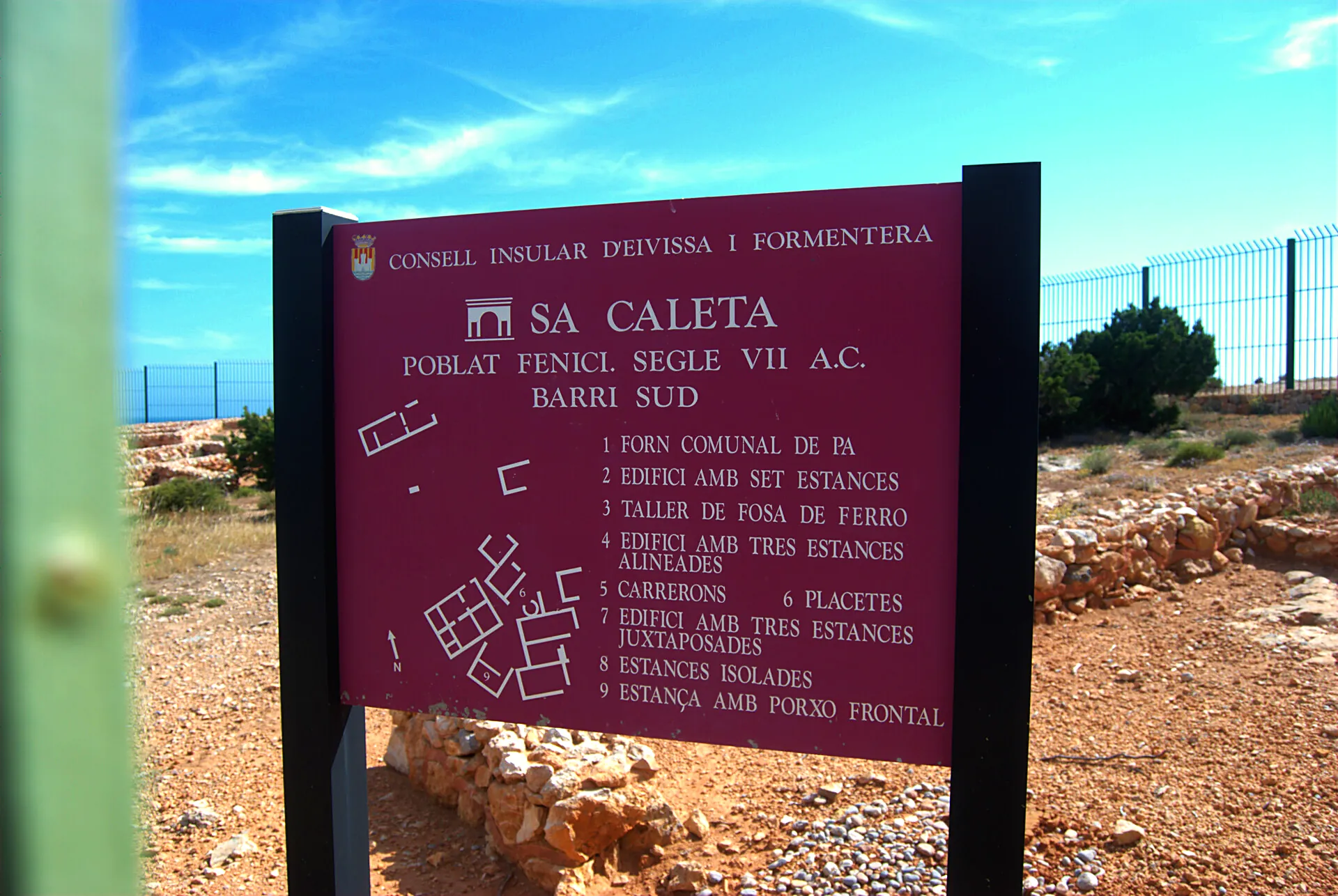
The birth of Ibiza
The Phoenician village dates back to the 8th century BC. The official version speaks of a settlement drawn here first and foremost by salt: this small neighbourhood of almost four hundred square metres is just a short walk from the salt flats, yet far enough away to escape the mosquitoes. In the 7th century BC, this small town reached its peak and became an important economic centre.
Between 600 and 590 BC, according to official sources, the Phoenicians abandoned the Sa Caleta village and moved to the bay of Ibiza, where the town you know today was born.
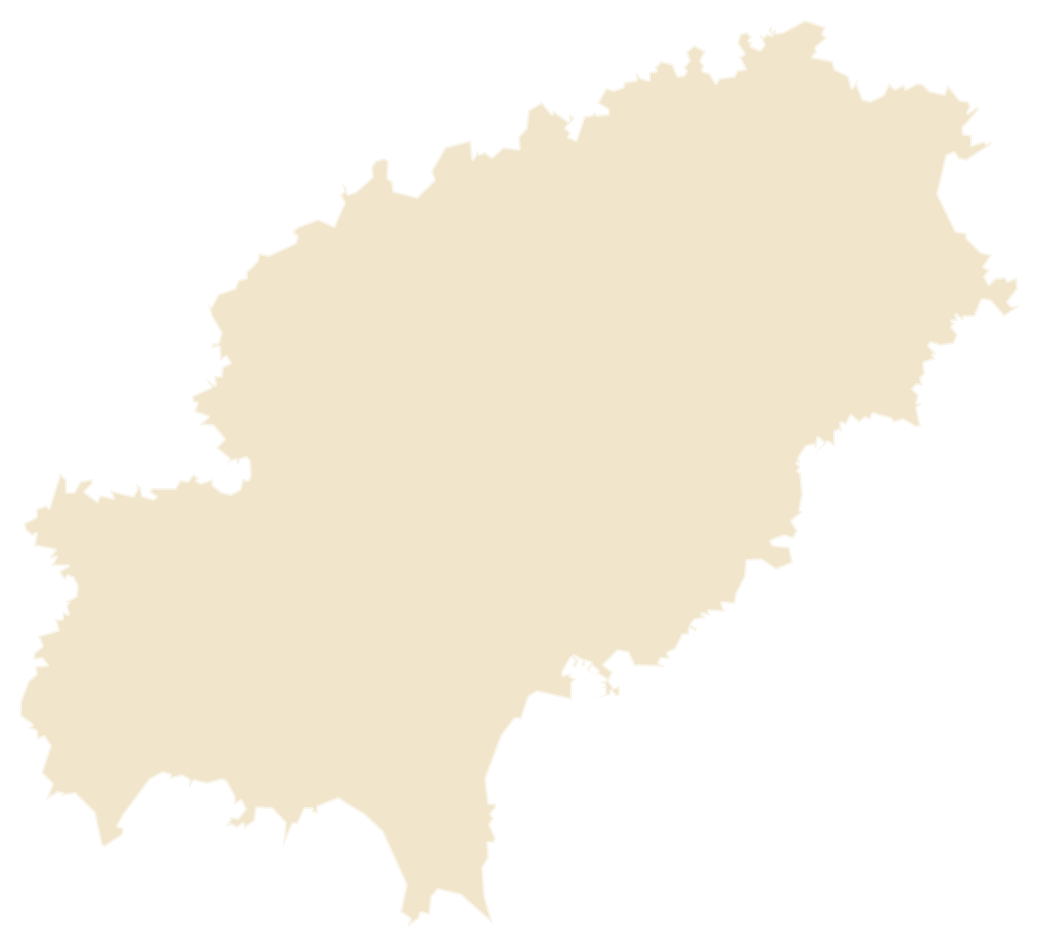 Phoenician Village of Sa CaletaOpen interactive mapGet directions ↗
Other places to discover around the Phoenician village of Sa Caleta
From the Phoenician village of Sa Caleta you can reach other places of cultural interest

Salt Workers’ Monument, 5 km away
For centuries, the island’s main economic activity was the salt trade.

Church of Sant Francesc, 5 km away
The parish church of Sant Francesc de Paula presides over Sant Francesc de s’Estany.

Capelleta d’en Serra, 6 km away
The Capelleta d’en Serra is about five kilometres east of Sant Josep de sa Talaia.
Nearby villages

Sant Francesc
Sant Francesc de s’Estany is a small village just outside Sant Jordi de Ses Salines, on the way to the beaches of Ses Salines and Es Cavallet.

Sant Jordi
Sant Jordi de Ses Salines is one of the most industrialised parishes on the island.

Sant Josep
Sant Josep de sa Talaia is a village nestled among mountains, yet its size and economic importance make it just as good for those looking for countryside as for those looking for the sea.
Beaches near the Phoenician village of Sa Caleta
If you fancy a swim, the beaches of Sant Josep are close by.


Es Codolar Beach belongs to the municipality of Sant Josep and is about ten kilometres from Ibiza Town and twenty-five from the town centre of Sant Josep.

In the municipality of Sant Josep you’ll find Cala Jondal Beach, more than two hundred metres long and about fifteen wide.